
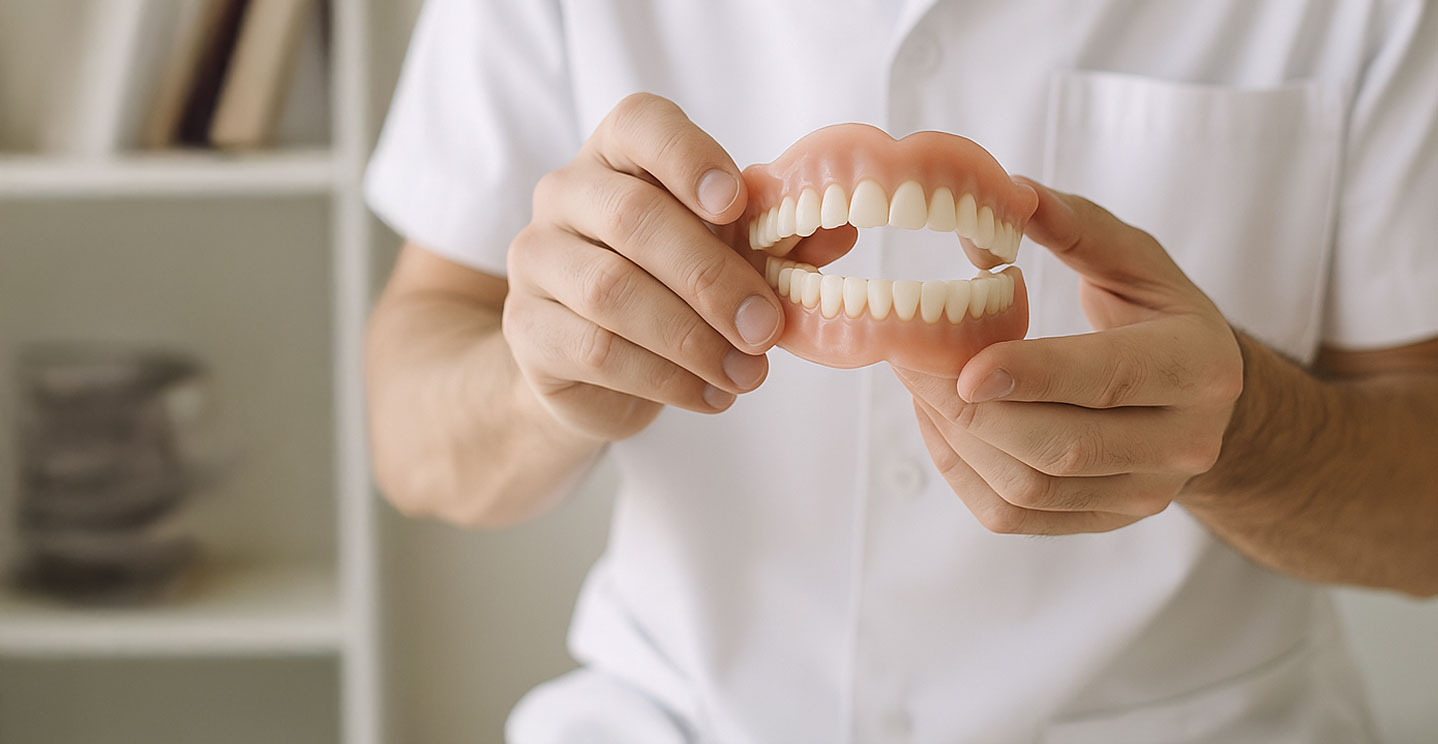
The most common question we get from patients considering implant-retained dentures in Adelaide is: "Are they actually worth it?" If you are looking into your options for Adelaide dentures, this guide gives you an honest, clinical comparison to help you make the right choice.
What is the Difference Between Conventional and Implant Dentures?
Traditional full dentures sit on the gum ridges and are held in place by a combination of suction, the contours of the mouth, and (for many patients) denture adhesive. They are fully removable. The lower jaw is notoriously difficult to stabilise — because there is no palate to aid suction, lower dentures often move during eating and speaking, particularly as bone resorption progresses over time.
Implant-retained dentures (also called implant-supported overdentures) attach to dental implants placed in the jawbone. The denture clips onto the implants using ball attachments or a connecting bar, providing a level of stability that traditional dentures cannot match. You remove them for cleaning, but they stay firmly in place during eating, speaking, and laughing.
How They Compare — At a Glance
Factor | Traditional Dentures | Implant-Retained Dentures
|
|---|---|---|
Stability during eating | Variable; lower jaw challenging | Excellent — implant-anchored |
Adhesive required | Often yes | No |
Bone preservation | No — bone continues to resorb | Yes — implants stimulate bone |
Eating confidence | Moderate | High — significantly better |
Removable? | Yes | Yes (overdenture type) |
Initial cost | Lower | Higher (includes implant surgery) |
Surgical procedure required | No | Yes — implant placement |
Long-term value | Variable | Better — slows bone loss |
Who Should Consider Implant-Retained Dentures?
Implant-retained dentures are highly recommended for patients seeking a more secure fit. They are worth considering if:
- You currently wear conventional lower full dentures that feel unstable or move during eating.
- You are about to get full dentures and want the best possible long-term outcome for your oral health.
- Your dentures have become progressively looser over the years as your natural jaw bone has resorbed.
- You rely heavily on significant amounts of denture adhesive just to manage daily wear.
- You have been avoiding social eating, laughing out loud, or ordering certain foods because of denture insecurity.
- You are in good general health and your jaw bone density is sufficient to support the placement of dental implants.
The Bone Preservation Advantage
This is one of the most important long-term advantages of implant-retained dentures that is often overlooked in basic cost comparisons. When natural teeth are lost, the jawbone that once supported them begins to resorb. It literally shrinks over time because it is no longer being stimulated by the pressure transferred through natural tooth roots.
Conventional dentures do nothing to slow this natural biological process. As the bone shrinks, the fit of the denture steadily deteriorates, requiring frequent relines and eventually total replacement. Over a decade, this cycle adds up significantly—both financially and in terms of the frustration of fitting a denture well over a diminishing bone ridge.
Dental implants function much like artificial tooth roots. They stimulate the jawbone during chewing, significantly slowing down the resorption process. Patients with implant-retained dentures typically experience much better long-term bone retention than conventional denture wearers. This translates to a better denture fit over time, less frequent relining, and a more youthful, stable facial profile.
The Process for Implant-Retained Dentures in Adelaide
Getting implant-retained dentures involves a seamless collaboration between two practitioners to ensure you get the perfect fit and function:
- Initial consultation with Paul Norris: We will discuss your lifestyle goals, assess your suitability, and help you understand the entire process and costs from start to finish.
- Implant placement surgery: Performed by an experienced local dentist or oral surgeon. The healing phase (osseointegration), where the bone fuses to the implant, typically takes 3–6 months.
- Prosthetic fitting with Paul: Once successful healing is confirmed, Paul meticulously designs and fits the custom overdenture to your new implants.
- Follow-up and maintenance: Routine attachment maintenance and periodic checks to ensure your dentures continue to function flawlessly.
Paul coordinates directly with top Adelaide dentists and oral surgeons throughout this process. If you don't already have a preferred dentist, he can happily advise on excellent local referral options.
Costs — What to Expect for Adelaide Dentures
We believe in complete transparency. Implant-retained dentures involve two separate cost components:
- Implant surgery (billed directly by your dentist or oral surgeon): Approximately $2,500–$5,000 per implant. For a secure lower denture, typically 2–4 implants are required.
- Prosthetic overdenture (custom designed and fitted by Paul): Approximately $4,000–$8,000 depending on the specific type of attachment required and the complexity of your case.
Total combined costs typically range from approximately $10,000–$25,000+ depending on the number of implants and the final prosthetic configuration. While this is a significant initial investment, for patients who achieve stable, adhesive-free dentures for the first time in years, many describe the results as truly life-changing.
Schedule a Consultation for Dentures in Adelaide
Making a choice about your smile and chewing comfort is a major life decision. If you want to find out if you are a candidate for implant-retained overdentures, don't wait to improve your quality of life.
Book a consultation with Paul Norris at our Adelaide clinic today. Let us help you regain your chewing confidence and secure your smile for the future.